The post Immunotoxicity – a hidden health risk appeared first on The Source.
]]>The drinking water sector faces constant challenges of protecting public health from a growing number of existing and new water contaminants. Recent amendments in EU Drinking Water Directives, including the inclusion of per- and polyfluoroalkyl substances (PFAS) and bisphenol A (BPA), reflect the growing concern regarding the health impacts of contaminants known for their immunotoxic potential. These substances can disrupt the body’s ability to protect itself from infections and diseases and, depending on their concentrations, can pose significant risks to public health. Despite this, immunotoxicity is not yet a standard endpoint in chemical risk assessments for water quality because of limited regulatory requirements. This article emphasises the need to integrate immunotoxicity assessment into water quality assessments to enhance safety and better protect public health.
Why immunotoxicity matters
The immune system is essential for protecting the human body from infections and disease. It consists of a complex network of cells, tissues and organs that work together to defend the body against harmful substances and to remove damaged or abnormal cells.
When the immune system is impaired, the body becomes more susceptible to infections and other serious health conditions. This impairment, known as immunotoxicity, can be a result of exposure to certain chemicals that disrupt the normal functioning of the immune system. This can happen directly or indirectly.
Direct immunotoxicity occurs when a toxic substance directly damages components of the immune system (e.g., lymphatic nodes), often weakening its ability to protect the body from infections or abnormal cells, which can increase the risk of incidence of certain diseases such as cancers. Indirect immunotoxicity happens when alterations in other physiological systems (namely the nervous or hormone systems) indirectly affect the immune system (e.g., autoimmune disease induced by endocrine disruptors), disrupting its normal function. These systems work together in a complex manner to maintain a healthy immune response, and if one system is affected, it can impact the others.
Cumulative concerns
A key concern with immunotoxicity is its subtle and cumulative nature. Unlike acute health risks, the effects of immunotoxic chemicals often develop gradually, making them harder to detect early. Over time, these subtle compounding effects can lead to significant immune dysfunction. For instance, exposure to PFAS – compounds that are common in industrial discharges and detected in drinking water – have been linked to reduced vaccine effectiveness, lowered resistance to infections, and a higher risk of certain cancer types (EFSA, 2020). Similarly, bisphenol A (BPA) – widely used in plastics – is associated with endocrine disruption and an increased risk of autoimmune diseases (Chen et al., 2018).
Immunotoxicants pose an especially severe risk to vulnerable populations, including children, pregnant women, and individuals with weakened immune systems, particularly during critical developmental windows when the immune system is more vulnerable. These critical windows are moments when the immune system is developing specific cells or organs and establishing immune repertoires (T-cells and antibodies). Given the immune system’s vital role in maintaining overall health, immunotoxicity represents a significant public health concern. Therefore, identifying immunotoxic substances, understanding their long-term effects, and preventing their presence at harmful concentrations in drinking water and in other sources of exposure is critical to the protection of public health.
Immunotoxicity testing of contaminants
Chemical contaminants from industrial, agricultural and domestic sources are commonly present in drinking water sources. Monitoring these contaminants is essential to ensure the quality of water intended for human consumption.
Although many contaminants are regulated and anticipated by drinking water companies, others remain undetected, unquantified and toxicologically uncharacterised. This is particularly concerning for (potentially) immunotoxic contaminants, as immunotoxicity is not yet systematically considered when deriving health-based limits for chemical compounds, because of limited regulatory requirements.
While chemicals such as PFAS and BPA are increasingly recognised for their harmful effects on the immune system, many other substances are either inadequately studied during the authorisation phase or entirely overlooked in the context of water safety.
In the European Union (EU), the REACH (Registration, Evaluation, Authorisation, and Restriction of Chemicals) mandates comprehensive safety assessments of chemicals. However, immunotoxicity testing is not routinely required. Immunotoxicity studies under REACH are only conducted when concern-driven scientific triggers arise, meaning potential immunotoxic effects may go unassessed.
Currently, water quality health limits are primarily based on toxicological risk assessments, considering endpoints such as carcinogenicity, reproductive toxicity, and organ-specific damage. However, there is still an unmet need for guidelines that also address immunotoxicity and the toxicity of other sensitive organ systems, such as the brain (neurotoxicity) and the endocrine system.
While standardised testing methods exist to assess the immunotoxic properties of individual chemicals for regulatory approval, standardised methods that can be incorporated into water quality assessments are lacking. A key difficulty lies in detecting low-level chemical mixtures in water, where multiple contaminants may interact in unpredictable ways.
There is a significant gap in understanding how these mixtures might affect the immune system compared with individual substances. A major complication is determining whether changes in immune system components, such as specific cells or proteins, actually indicate harm to immune function. This challenge applies to both individual substances and mixtures of contaminants, as well as variations in factors such as age and gender, with different methodologies potentially further complicating the process.
In addition, the immune system has built-in backup mechanisms that can compensate for damage, potentially masking the effects of immunotoxicity. This makes it difficult to establish clear, standardised guidelines for identifying and interpreting immunotoxic effects, as the immune system may adapt or compensate in ways that obscure the true extent of the damage.
Assessing risk
There is a tendency to assume that health effects are unlikely to occur at the low concentrations typically found in drinking water. But this perspective overlooks the potential long-term risks associated with low-level, chronic exposure to contaminants. Even at low concentrations, chemicals in drinking water, such as disinfection by-products or environmental contaminants, can accumulate in the body over time, potentially weakening the immune system and increasing vulnerability to infections or diseases. To address these gaps, there is a pressing need for water quality monitoring and risk assessment approaches that include immunotoxicity as an endpoint.
Emerging approaches
One promising approach to immunotoxicity testing is the evaluation of adverse outcome pathways (AOPs). AOPs are a framework for understanding how chemicals interact with biological systems, potentially leading to adverse health outcomes such as diseases (Nymark et al., 2021). AOPs map the sequence from a chemical’s initial interaction with the body, referred to as a molecular initiating event (MIE), to its final adverse impact on health, the adverse outcome (AO), through several intermediate key events (KEs). A single MIE can trigger a cascade of downstream KEs, which can diverge and lead to various toxicological outcomes (Spinu et al., 2019). Alternatively, multiple MIEs can converge into a single adverse outcome.
In the context of drinking water, prolonged low exposures to contaminants can lead to MIE, which may contribute to KEs, leading ultimately to AOs. For example, drinking water containing organohalogen disinfection by-products (DBPs), such as chloroform, trichloroacetic acid, and trichlorophenol, has been linked to mitochondrial toxicity (McMinn et al., 2019). The key event in this case is the excessive production of free radicals (reactive oxygen species), which can overwhelm the body’s antioxidant defences, leading to oxidative stress and associated cellular damage.
Despite this growing understanding of how contaminants trigger these molecular mechanisms, the application of AOP frameworks to immunotoxicity is still limited. New approach methodologies (NAMs), which include non-animal testing methods, such as in vitro bioassays and computational models, can play a critical role in bridging these gaps by providing the tools to assess key events within AOPs.
Operational approaches
AOPs may seem very technical and difficult to integrate into the daily operations of water quality managers. However, gaining a basic understanding of key concepts such as MIEs and KEs, which trigger adverse effects such as immunotoxicity, can be highly useful. This knowledge can help inform risk management decisions and assumptions, guiding more effective strategies for managing water quality across various environments, including drinking water, surface water, groundwater and wastewater.
Effect-based monitoring (EBM), for example, has gained recognition as a valuable approach for evaluating drinking water quality, complementary to chemical analytical approaches.
EBM refers to a set of bioanalytical tools (bioassays) that assess water quality by capturing the combined effects of the complex low-level mixture of known and unknown chemicals present in water, if they are active in the applied bioassays. This approach is particularly important given the complex mixtures of chemical contaminants found in water bodies, which traditional targeted chemical analyses may not be able to capture adequately.
Knowledge of AOPs can aid in identifying the most relevant effect-based method to detect immunotoxic or other effects of low-level chemical mixtures in water. In addition, it can support the establishment of effect-based trigger values (EBTs), which are used as benchmarks to assess potential health risks and guide regulatory decisions to ensure drinking water is safe. This enables water companies to implement more focused and efficient monitoring strategies, especially when time, budget or resource constraints are present. Prioritising bioassays based on AOPs may ensure that the most adequate bioassays provide relevant information based on the most critical indicators.
Integrating immunotoxicity into water quality monitoring
To address the limitations of conventional effect-based monitoring techniques in detecting the specific immunotoxic effects of complex mixtures of legacy and emerging contaminants, there is a pressing need to make use of immunotoxicological information of individual substances – and relevant mixtures – and consider integrating immunotoxicity testing methods into the routine evaluation of drinking water sources. The following recommendations outline a clear path forward:
Implementation of a tiered approach to testing, starting with broad screening bioassays and moving to more detailed studies on high-risk contaminants. This will help prioritise which chemicals to focus on, based on their potential to affect immune health.
Establish EBTs for chemical mixtures with immune effects. EBTs are the thresholds that indicate whether a chemical concentration requires further investigation. This will enable quicker decision-making when assessing water safety using effect-based methods.
Prioritise substances not routinely tested for immunotoxicity, from sources such as chemical industries, pharmaceuticals and microplastics, based on factors such as environmental persistence, potential for human exposure, and possible health risks.
Develop scientifically validated testing protocols for immunotoxicity aligned with both next generation risk assessment (NGRA) and water quality monitoring, to ensure that practices reflect the latest advancements in immunotoxicological science.
Further research to develop standardised immunotoxicity bioassays for drinking water.
Conclusion
Immunotoxicity is an essential, but overlooked aspect of drinking water safety and chemical safety in general. Chemicals that disrupt the immune system may not show immediate effects, but their long-term impacts can be adverse, especially for vulnerable populations.
The lack of standardised methods for detecting immunotoxicity in water emphasises a significant gap in current water quality practice, which leaves the public’s health at potential risk from contaminants via this route. While it is not yet definitively established whether immunotoxic effects from drinking water are likely or widespread, certain populations may be more susceptible to potential risks. With emerging contaminants posing new challenges, it is crucial that water utilities continue to take proactive measures to assess and mitigate risks, including those resulting from exposure to immunotoxic contaminants. Collaboration between scientific researchers and water utilities is crucial for conducting research that addresses knowledge gaps about the immunotoxic potential of emerging water contaminants.
Acknowledgement
The research presented in this article was funded by the Waterwijs collective research programme of Dutch water companies, Flemish water company De Watergroep, and the Association of Drinking Water Companies, the Netherlands (Vewin).
The authors: Sanah Majid is a scientific researcher and toxicologist, Daniel Duarte is a scientific researcher and project leader, and Tessa Pronk is a scientific researcher, all at the KWR Water Research Institute;
Corine Houtman is a toxicologist at Het Waterlaboratorium and VU University;
Insam Al Saify is a toxicologist at Waternet;
Merijn Schriks is a specialist drinking water quality toxicologist at Vitens;
Janine Ezendam is Head of the Department of Innovative Testing Strategies at the National Institute for Public Health and the Environment;
Raymond Pieters is Associate Professor at Utrecht University and full Professor at Utrecht University of Applied Sciences;
Milou Dingemans is Chief Science Officer and Principal Toxicologist at KWR Water Research Institute and guest researcher at the Institute for Risk Assessment Sciences, Utrecht University;
All are based in the Netherlands
The post Immunotoxicity – a hidden health risk appeared first on The Source.
]]>The post When trees became the enemy appeared first on The Source.
]]>Why North American cities must thin overgrown forests to improve water supplies. By Helen Poulos
As the global freshwater deficit grows, a survey of 1,000 “environmental experts” from 77 nations asked why. Was it climate change, pollution, allocation, or rising demand? Surprisingly, 79 percent said the primary culprit was deforestation
The roots of that blame are broad, deep, strong, and old. A century ago Congress founded the USFS on the national security rationale that federal protection of forest reserves would maintain the stability of the navigable rivers they fed. Over the ensuing decades, countries followed suit, assuming that reliable currents downstream always depend on dense forests upstream. The forest-water linkage now shapes widespread efforts to secure flows with large-scale afforestation of headwaters of at-risk river basins for the worthy goal of human development, resilience, climate mitigation and adaptation. Given such high stakes, it’s worth asking: does our universal mindset linking afforestation with basin health and water quantity actually, well, hold water?
The evidence points in the opposite direction. Indeed, the comfortable notion that more trees invariably result in more water, stability, livelihoods, clean air, or biodiversity has begun to look misguided at best and, at worse, catastrophic. Rather than replenish downstream runoff, aquifers, wetlands and streams, aggressive afforestation tends to dry them out and clog them up. Worldwide, many experiments indicate that rapid and aggressive afforestation and reforestation has resulted in lower water tables, less reliable springs, and reduced streamflow, especially in the dry season. Much of the global south lacks data. But in the US, the mounting body of scientific literature on the effects of land clearing on forest hydrology suggests conventional wisdom is profoundly wrong, yet tenacious in its grip.
Nowhere else are trees so highly regarded as a shade-creating panacea to pressing problems than in the US. Nowhere else honours tree planting as a sacred 150-year-old national holiday.
Nowhere else is the afforestation-secures-runoff ethic so deeply entrenched and rigidly enforced. And nowhere else have flawed assumptions proven so ecologically destructive, economically disastrous, socially disruptive, medically harmful, or politically reckless.

As California Governor, Ronald Reagan once justified clear-cut logging of old growth by asking (we assume rhetorically), “a tree is a tree; how many more do you need to look at?” Later, while running for President, he warned us how “trees cause more pollution than automobiles.” We cringed at his biases and sniggered at his willful ignorance. Yet due to forces he neither intended nor foresaw, Reagan’s “gaffes” to some extent ring true.
Why? Because today’s hottest and thirstiest parts of America are over-forested due to a vigorous and expensive federal fire-suppression initiative that has silently stocked semi-arid regions with what we estimate to be several billion trees too many.
Frequent, low-intensity fire regimes that regularly pruned back new growth have been blocked for decades on end. Now the relentless metastasising spread of native, excess trees reduces sap flow, slows wind-flow, and alters the biophysical structure of complex landscapes. Shade tolerant species take over; Aspen, lupine, sequoia, and fireweed can’t reproduce.
Less appreciated–both as crisis and opportunity–is how the afforestation caused by a century of fire suppression depletes a natural resource that has today become far more precious than toilet paper: freshwater.
More than half of humanity is now urban. Our freshwater shortfall comes from population growth, waste, pollution, rising demand for water-intensive goods–but also parasitic competition from unnatural afforestation.
Of the 39 US states facing water scarcity, few feel stress more than those west of the 98th Meridian. ‘Cities in the wilderness’–from Spokane to El Paso, Bozeman to San Diego, and Salt Lake City to Tucson–depend on forest lands where rain and snowfall filter through soil to supply water. Now, as billions of excess conifers drink up the tributaries of the Colorado, Columbia, Missouri, and Rio Grande, we’ve turned trees from friends into enemies.
The ecological blowback didn’t happen by accident, overnight. Water depletion from afforestation is the unintended consequence of our deliberate 20th century federal lands policy. For millennia, fires set by lightning or by Native Americans limited western forest stocks to roughly a few dozen trees per acre. No longer. The nationally terrifying Big Blowup wildfires of August 1910 led the US to in effect declare war on wildfire. The parallels with more recent wars on abstract nouns are eerie. The government’s tactics in both theatres include: security watchtowers, propaganda, aerial bombing and color-coded threat security alerts; ground troops carry tattered paperbacks of Sun Tzu’s The Art of War; bosses push for the deployment of drones; trained elite crews infiltrate behind enemy lines to snuff out nascent cells; Congress annually writes an emergency blank cheque, which in wildfire exceeds US$2.5 billion.
The result? More new trees compete for less sunlight, thinner soil nutrients and scarcer water availability. Insects and diseases spread faster. Unnatural afforestation creates a deadly tinderbox; fuels accumulate year after year until the inevitable wildfires burn faster, hotter, more destructively and deadly than ever, consuming the treasure of citizens and the blood of our youth–from Montana’s Mann Gulch (1949) to Colorado’s Storm King Mountain (1994) to Arizona’s Yarnell Hill (2013).
Ironically, Congress enacted the anti-fire 1911 Weeks Act and 1924 Clarke-McNary Act to save money and lives and to secure downstream navigable rivers. That era’s national security precaution reflects Eastern mentality. It backfired in the semiarid west, where fire exclusion degraded the integrity and runoff of high-elevation watershed recharge zones. Our analysis of upland research reveals downstream casualties. Suppression of fire causes suppression of flows, until you literally can’t see the river for the trees.
Yes, the dynamics are complex. Sure, it’s dangerous to overgeneralise. The extent of hydrological impacts from fire-exclusion and afforestation will fluctuate dramatically by location, depending on forest slope, aspect, age, altitude, density, latitude, species composition and natural history. But adjusting to these variables, and taking a conservative approach, we can reveal the overarching pattern of the last century.
First, the past century of fire suppression has resulted in roughly 112 to 172 more trees per acre in high-elevation forests of the west. That’s more than a fivefold increase from the pre-settlement era.
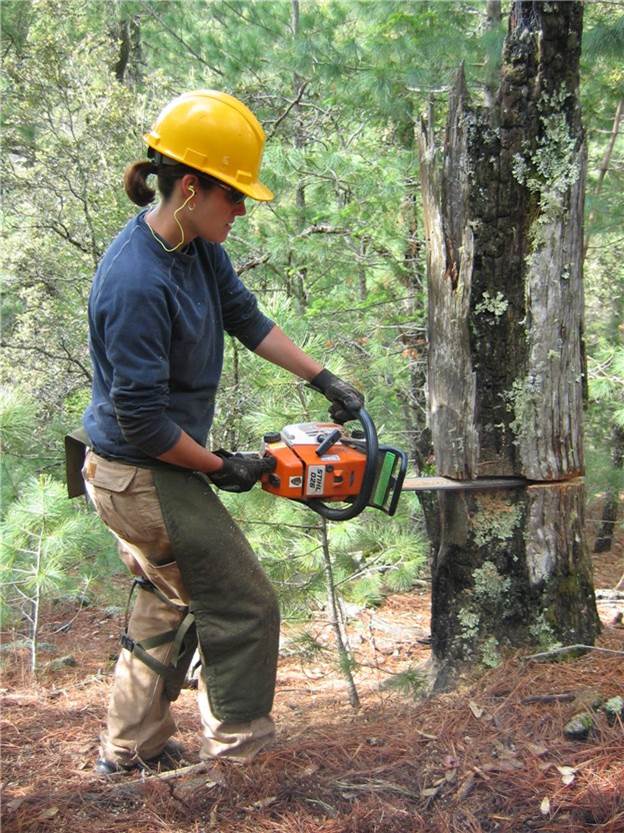
Second, denser growth means that the thicker canopy of needles will intercept more rain and snow, returning to the sky as vapour 20 to 30 percent of the moisture that had formerly soaked into the forest floor and fed tributaries as liquid. But let’s conservatively ignore potential vapour losses from ablation. Instead, assume that the lowest average daily sap flow rate is 70 litres per tree for an open forest acre of 112 new young trees. Even then, this over-forested acre transpires an additional 2.3 acre-feet of water per year, enough to meet the needs of four families.
Third, that pattern adds up. Applying low-end estimates to the more than 7.5 million acres of Sierra Nevada conifer forests suggests the water-fire nexus causes excess daily net water loss of 58 billion litres. So each year, afforestation in the absence of fire means 17 million acre-feet of water may no longer seep in or trickle down from the Sierra to families, firms, farms or endangered fisheries.
Our estimates are on the low end. Yet they align with equally conservative assessments, based on concurrent, parallel literature reviews using different methodology. Some report that “a 40 percent reduction of forested watersheds on the West slope of the Sierra Nevada could increase water runoff yields by 9 percent. More sustained and extensive treatments in these increasingly dense forests could increase water yield by up to 16 percent.” They also accord with studies of overseas semi-arid landscapes that increase yield through forest thinning.
Encouragingly, the USFS appears prepared to consider replacing our old, flawed, afforestation-boosts-streamflow mindset with the recognition that forests now and always have consumed water, and that growing threats from fire to insect outbreaks are linked to the water stress of over-forestation.
So how do we reverse all this? A century’s accumulation of dry fuel in public lands makes it too costly and risky–for people, property, habitats or emissions–to unleash prescribed fires throughout our 16-million-acre conifer tinderbox. The whine of chainsaws may generate suspicion on the left, while conservatives may object to billion-dollar public works projects. Yet a third way could aid both anemic economies and anemic rivers: surgically remove the bulk of small-diameter ‘trash trees’ through careful, transparent, contractual thinning.
Who pays? Now that a lumber mill’s trash has become a water user’s treasure, parched downstream interests could organise to restrict thinning to scrawny excess trees simply for the purpose of releasing the liquid assets they consume. Cameras can monitor every cut. Water rights markets value an acre-foot at US$450 to US$650 and up. So rather than compete with forests for rain and snow, private and public institutions could invest US$1,000 per acre to cut down fire-prone trash trees, yielding at least US$1,100 to US$1,500 worth of vital water.
This contractual approach–anchored by Western cities–pays for itself while reducing fire risk, increasing water runoff to streams and rivers, raising revenues, and boosting job growth in poor regions. What’s not to like?
There is no need for Federal or State funds or new laws. State and federal regulators should cut the red tape that might hold up local agreements between cities and rural areas that could restore forest health and replenish shrunken rivers. Regional precedents in the forest-to-faucet agreements have emerged from Denver to Raleigh.
Our cultural mindset may presume that if a dozen trees are good, 100 trees are better. But as temperatures rise, too much forest strangles too many watersheds. In order to replenish streams before they suffocate, and de-fuel the tinderbox before it explodes, we must stop hugging trees, or Smokey Bear, and embrace the images of forests with fewer trees.
The post When trees became the enemy appeared first on The Source.
]]>The post AquaRating: transforming the water and sanitation sector appeared first on The Source.
]]>For all of us who have been working in water for the last 15 years or more, 2015 was year 1, the target year for the Millennium Development Goals. For many countries, the data showed great progress: from 1990 to 2012, 2.3 billion people gained access to improved water sources and almost 2 billion to improved sanitation.
However, there is no room for complacency–today more than 700 million people, still use unimproved drinking water sources; and some 2.5 billion people unimproved sanitation facilities. The numbers are much worse among the most vulnerable segments of society and in the most remote areas of our world.
The Sustainable Development Goals adopted by the 70th UN General Assembly, specifically Goal No. 6, seeks to ensure the availability and sustainable management of water and sanitation for all by the year 2030 which means governments should work not just on ensuring service quality. They must also reduce wastewater pollution, strengthen water governance, boost efficiency in the use of water resources, and protect our liquid natural capital.
AquaRating is an international standard that enables water and sanitation operators to focus on the quality of the service they are providing. As a standard, AquaRating sets the baseline for utilities to monitor their performance and plan for improvements. Jointly developed by the Inter-American Development Bank (IDB) and the International Water Association (IWA), AquaRating offers a comprehensive, impartial and credible evaluation of the utilities’ performance and best management practices, based on three dimensions: (i) performance indicators; (ii) best practices; and (iii) reliability of information.
The AquaRating system gives a detailed evaluation of 112 elements across eight key areas and validates information through an independent auditing process, enhancing accountability and transparency. The evaluation system has been tested in 13 utilities in 2014 in nine countries in Europe and Latin America and is currently being implemented through individual operators in Ecuador, El Salvador, Argentina and Spain and through government and financial institutions in Peru, Colombia and Mexico, Sierra Leone and Fiji. AquaRating makes a significant contribution to improving utility performance and a roadmap to anticipate future challenges, bringing us a step forward meeting the Water 2030 agenda. The rating system allows for better planning and decision making processes for the utilities’ management to achieve sustainable and efficient outcomes.
The post AquaRating: transforming the water and sanitation sector appeared first on The Source.
]]>The post H&M and WWF to work on water challenges in Turkey appeared first on The Source.
]]>Clothing group H&M and the World Wide Fund for Nature (WWF) have announced a new initiative to help Turkey tackle its water challenges, particularly pollution.
The project will focus on improving water management methods and policies in the Büyük Menderes River basin, which is home to large-scale agriculture and industry, including textile operations.
Like many other river basins, Büyük Menderes suffers from declining water quality and could face increased water stress in future due to climate change and development.
“Turkey’s textile industry is booming but it faces serious risks from pollution, poor water management and weak regulations: collective action is needed now to mitigate these risks,” said Daniel Robertsson, Head of Corporate Engagement at WWF Sweden and responsible for the H&M WWF partnership. “WWF and H&M group have already helped to strengthen water management in China and Bangladesh and we believe our partnership will contribute to similar improvements in Turkey.”
As part of the initiative, policy makers and other companies in Turkey will collaborate to promote clean production technologies in the textile sector as well as demonstrate the value of water stewardship. H&M will influence its suppliers to invest in clean production and better water management.
“Being one of Turkey’s largest textile buyers, H&M group has a strong incentive to influence the development of more sustainable water use in the country’s textile industry,” said Anna Gedda, Head of Sustainability at H&M group. “In addition to the work we do on a regular basis to improve water management practices in all of our facilities, we will engage our suppliers in cleaner production programmes in the basin and try to inspire others by sharing best practices.”
WWF and H&M group first began working together in 2011, focusing on water stewardship. Since then the partnership has helped transform H&M group’s internal water management as well as engaging suppliers, policy makers, NGOs, communities and other companies to collectively advocate for more sustainable water use in specific river basins in Asia.
The post H&M and WWF to work on water challenges in Turkey appeared first on The Source.
]]>The post Can the Year of Wastewater catalyse action in Albania? appeared first on The Source.
]]>As a young wastewater engineer at the Water Supply and Sewerage Company in Korça, the largest city in southeast Albania, I was given my first real opportunity to develop my practical skills as well as the ability to provide solutions to safeguard the health and wellbeing of both people and the environment.
When I started, in 2009, Korça discharged its wastewater through five outfalls into agricultural drains, which were modified by farmers to use the raw sewage for irrigation. The raw sewage partially passed through the Turani water supply aquifer field, and contributed to the pollution of the aquifer. As you can imagine, the contaminated drinking water caused some serious cases of dysentery and diarrhea in Korça.
The necessity for aquifer protection, and need to safeguard public health, resulted in the development and implementation of a large-scale project that transformed the city’s sanitation.
Eight years later, and we are halfway through the International “Year of Wastewater”, intended to mobilise action on this critical sector. The “Year of Wastewater” has lifted wastewater management up the list of priorities, and led to renewed attention on finding solutions to ongoing challenges. Yet what is clear to me, is that it is essential we increase our efforts further if we want to ensure sustainable wastewater management, and not only in Albania.
This September marks the second anniversary of the Sustainable Development Goals, including Goal 6.1 and 6.3 to provide universal access to adequate sanitation, and to halve the proportion of untreated wastewater being discharged into the natural environment. We have 13 years left to halve the proportion of untreated wastewater. In 2009, Albania discharged 75 percent of wastewater untreated into nature. Urgent action is needed. Wastewater may not be glamorous, but it is an important, exciting and challenging sector in which to work.
Luckily, water has been prioritised at the national level over the last decade, particularly during election periods. However, the allocation of capital investment funding has not been equal to the political promises. The capital investment that has been made has not been accompanied by proper investment in human resources or professional capacities to operate and maintain the infrastructure. The aging workforce, and lack of appropriately skilled professionals entering or staying in the sector, will become a critical constraint in addressing wastewater treatment needs in the coming years.
Achieving reliable and efficient services will require capacity building and institutional strengthening. The SDGs require a fast start up, with integrated thinking and collaborative action. They require multidisciplinary and cross-sectoral stakeholders to make it work. Emerging water leaders, those young people who grew up in this changing society, who are initiating multi-disciplinary groups, are well positioned to succeed in these aims.
However, to reach these wastewater targets, and to become a driving force behind the SDG Agenda, we must provide young water professionals with the skills and opportunities needed to reach their potential, support development, and contribute with their knowledge. This will ensure that these emerging water leaders are at the forefront of shaping the future they will inherit.
The IWA International Young Water Professional Conference 2017 will be in Cape Town, South Africa from 10-13 December.
The event will brings together 450 water, environment and related young professionals from across the globe to showcase how young water professionals are making an impact across the sector.
IWA provides support and guidance to strengthen and support the Emerging Water Leaders programme through different mechanisms; and by equipping them with skills, knowledge and confidence in their abilities.
The post Can the Year of Wastewater catalyse action in Albania? appeared first on The Source.
]]>The post British Water publishes code of practice for SuDS technology appeared first on The Source.
]]>British Water members ACO Technologies, Hydro International and Polypipe joined with the environmental regulator to sponsor an in-depth study of UK rainfall by research consultancy HR Wallingford. The information was key to the development of a robust product testing protocol.
“Standards are necessary to demonstrate how well proprietary devices used in sustainable drainage systems (SuDS) treat run-off and remove heavy metals from the water cycle. Until now, there was no standard for testing in the UK,” said Marta Perez, Technical Director, British Water.
The voluntary code of practice allows professionals delivering SuDS to apply a risk-based approach to minimising the environmental impact of the diffuse pollution from runoff. Verifying the capture and retention capabilities of different devices for a range of pollutants gives regulators, designers, specifiers and local authorities the information they need to select the most appropriate technology in a given application.
“Conducting tests overseas creates a heavy cost burden which was prohibitive for smaller UK manufacturers looking to sell at home,” added Perez. “This code of practice defines the process necessary to measure the pollutant capture and retention capability of any device entering the UK market.”
The tested devices are typically used to treat runoff from urban and residential hard surfacing such as roads and car parks. Part of the code of practice is aimed at determining three functional requirements of treatment devices:
- Typical pollutant capture efficiency for frequent, sub-annual rainfall events
- Sediment retention capability for up to 1:2 year rainfall events likely to cause washout
- Capability of filter media to retain dissolved pollutants under the influence of de-icing salt
“The tests can be completed by the manufacturer or at a commercial test facility but must be witnessed by an approved independent UKAS-accredited third-party,” said Perez. “British Water is now seeking a partner in the position to install and run testing equipment.”
The post British Water publishes code of practice for SuDS technology appeared first on The Source.
]]>The post Wastewater, one of the greatest untapped opportunities for sustainable development in India appeared first on The Source.
]]>As a fast growing economy, urbanising at an even faster rate, India is already water stressed. The severe drought of 2016, which affected more than half the country and saw some of the highest temperatures ever recorded, only served to highlight an already serious problem. Water scarcity affects millions of Indians on a daily basis, negatively impacts both the agricultural and energy sectors, and puts sustainable economic growth at risk.
To prevent this situation becoming the new normal, urgent and coordinated action to address the supply-demand deficit across sectors is required. Greater efficiency in water use, addressing water allocations amongst sectors, and reducing water loss in supply systems, are critical. Often overlooked, however, is the role of wastewater in achieving these goals.
Today, a whopping 70% of India’s wastewater is released untreated, polluting surface and groundwater sources, and posing a great risk to public health. The policy prescriptions on safe use of wastewater, effluent and sewerage treatment are in place, but better, more effective implementation is needed on the ground. The rapid growth in urban areas across the country makes this ever more urgent, and calls for concerted efforts to address wastewater management in these towns and cities. A mosaic of centralised and decentralised wastewater treatment systems are needed in both urban and rural areas.
Understanding and visualising the flow of waste within a city is the first step in an effort to plan and manage waste. Shit Flow Diagrams (SFDs), initiated by the Sustainable Sanitation Alliance (SuSanA), are a powerful visualisation of sanitation in urban centres that can help municipalities, planners, public health officials, and citizens to better advocate for improved sanitation, including addressing wastewater and faecal sludge treatment infrastructure.
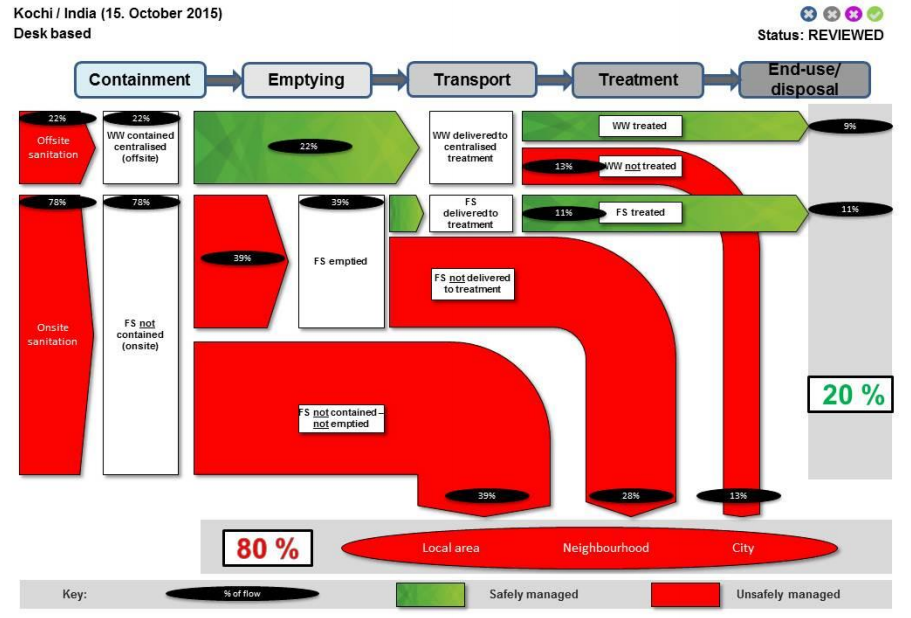 A quick analysis of SFDs shows that in many cities, especially in low- and middle-income countries, a large proportion of the population depend on on-site sanitation. Whether or not the facilities are emptied, and whether the emptied contents undergo treatment before reuse or disposal, usually presents the main challenge. This highlights the importance of fecal sludge management (FSM), an issue that is climbing up the political agenda in India, but which scores poorly on indices on access to sanitation in the region.
The push to improve sanitation is gathering momentum with the Clean India campaign. As that momentum grows, it is essential that this moves beyond creating infrastructure, or making locations ‘open defecation free’, to also ensuring safe disposal or reuse of the waste generated. The World Health Organization (WHO) has developed a health-based risk assessment tool to better plan and manage this across the entire sanitation service chain.
The Sanitation Safety Planning (SSP) is a critical tool that can be used to plan and manage the safe disposal of wastewater, greywater and excreta. Case studies from around the globe demonstrate successful use of the tool in safely managing sanitation by-products. Using the SSP tool, the WHO has actively collaborated with national organisations to promote better planning and management of sanitation in India.
A pilot project in Devanahalli, Karnataka, resulted in the town administration recognising not only the potential of the existing informal reuse of wastewater and faecal sludge, but also the importance of engaging with the stakeholders responsible for its reuse. In addition, through the use of SSP, Devanahalli attracted funding for the construction of a Faecal Sludge Treatment Plant. This, in turn, has attracted attention from both the government and private sector looking to replicate the success.
Attaining total sanitation coverage within urban and rural areas demands robust recycling and reuse of wastewater. This will require multi-disciplinary engagement and processes that empower a variety of stakeholder groups. The larger question of wastewater governance calls for integrated efforts from across sectors, ranging from urban development, public health, engineering, water resources management, pollution control boards, water quality monitoring, and wetland management, to name just a few.
Crucial to addressing the sanitation challenge is recognising and synergising formal and informal knowledge systems. Only then can we hope to capitalise upon the great opportunities wastewater presents for sustainable development.
The post Wastewater, one of the greatest untapped opportunities for sustainable development in India appeared first on The Source.
]]>The post EPA launches drinking water plan appeared first on The Source.
]]>The US Environmental Protection Agency has released a plan to increase the reliability of the country’s drinking water, following several incidents including the well-publicised events at Flint, Michigan.
“Ensuring that all Americans have access to safe drinking water is an absolute top priority for EPA,” said Gina McCarthy, EPA Administrator. “We must work collectively to seize opportunities for progress, partnership, and innovation in order to continue to provide our citizens with the safest drinking water in the world.”
The plan includes six priority areas and identifies proposed actions for each area:
- Building capacity for water infrastructure financing and management.
- Advancing oversight of the Safe Drinking Water Act.
- Strengthening source water protection and resilience of drinking water supplies.
- Addressing unregulated contaminants.
- Improving transparency, public education, and risk communication on drinking water safety.
- And reducing lead risks.
The plan reflects input from state, local, and tribal government officials, drinking water utilities, community groups, and environmental groups. While the agency and partners have already begun to take some actions, others will require additional resources and further stakeholder engagement.
In tandem with the development of the plan, the President’s Council of Advisors on Science and Technology (PCAST) undertook a study on science and technology for drinking water safety. The PCAST’s recommendations will complement and support EPA’s plan.
The agency stressed that it has established drinking water standards for more than 90 contaminants, and compliance data show that more than 90 percent of the nation’s water systems consistently meet those standards.
An EPA spokesperson said the main challenges threatening these standards are ageing infrastructure, lack of funds, pollution, contaminants, and the impacts from climate change and drought.
The post EPA launches drinking water plan appeared first on The Source.
]]>